
In November 2005, the Xbox 360 hit store shelves, introducing millions of players to high-definition gaming and a sleek, fan-favorite user interface known as the Blades dashboard. With its satisfying swooshing sounds, colorful sliding tabs, and snappy navigation, the original OS defined an era. But by late 2008, Microsoft retired the design, replacing it with the New Xbox Experience. For nearly two decades, getting back to the Blades interface was almost impossible for the average enthusiast. Microsoft had locked the door and thrown away the key.
Now, a breakthrough in the retro hardware community has changed everything. A group of independent preservationists has released a new custom firmware exploit that completely bypasses the Xbox 360’s notorious hardware-level downgrade protections. For the first time, gamers can safely revert modern consoles back to the beloved 2005 system software without risking a permanent brick.
The eFuse Lockout
To understand why this achievement is so significant, you have to look at how Microsoft built the Xbox 360’s security. The console’s central processing unit contains tiny, physical fuses called eFuses. Every time Microsoft pushed a major system update, the console would deliberately burn a specific number of these fuses. During bootup, the system checked the blown fuses against the version of the operating system trying to load. If the numbers did not match, the console refused to start.
This hardware-enforced lock successfully killed any official or unofficial attempts to downgrade. Once a console was updated, it could never go back. Pristine, launch-era consoles running the early Blades dashboards became rare collectors’ items, sometimes selling for hundreds of dollars online. Those who wanted the classic experience had to hunt down dusty, untouched machines that had somehow avoided internet connections for twenty years.
How the 2026 Exploit Bypasses the Burn
The new exploit, developed by a collaborative group of hardware modders and software engineers, utilizes a highly refined version of the classic Reset Glitch Hack (RGH) combined with newly written custom firmware. Instead of physically altering the motherboard or attempting to repair blown eFuses, the new software tricks the console’s hypervisor during the initial boot cycle.
“We aren’t rewriting the physical history of the chip,” says Marcus Thorne, a digital preservationist involved in testing the new method. “Instead, we are feeding the processor a spoofed signature that mimics the exact fuse state the 2005 kernel expects to see. The CPU thinks it is running on a pristine, un-updated launch model from late 2005.”
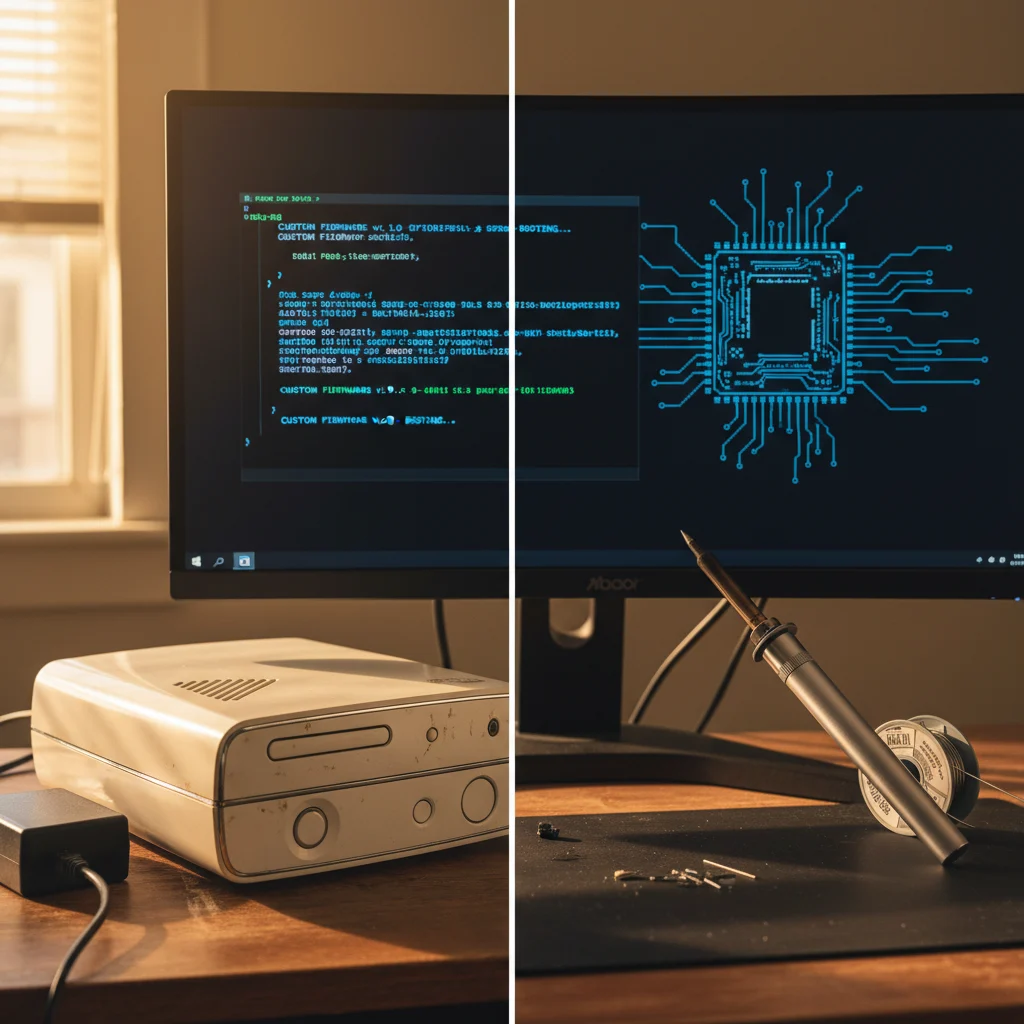
This bypass is remarkably stable. Previous attempts to simulate older dashboards often resulted in unstable systems, graphical glitches, or total crashes. The new custom firmware runs the actual, original 2005 code directly on the hardware. It allows full access to legacy features, offline profiles, and early Xbox Live Arcade titles exactly as they functioned two decades ago.
Overcoming Motherboard Hurdles
In the past, even if a user managed to run older software, they faced severe hardware compatibility issues. The original 2005 software was built specifically for the earliest Xbox 360 motherboard revision, codenamed Xenon. These early models were notorious for the “Red Ring of Death” hardware failure. Later, more reliable motherboards like the Jasper and Slim models never officially ran the Blades interface.
The 2026 custom firmware bridge solves this. It translates the legacy code so it runs flawlessly on the more reliable, late-model hardware. This means gamers can experience the 2005 dashboard on a console that won’t overheat and die a week later.
Preserving Gaming History
For historians and preservationists, this milestone is about more than just nostalgia. User interfaces are a critical part of video game history, yet they are rarely preserved. When a company updates an operating system, the old digital architecture is often lost forever. By unlocking the ability to run the Blades dashboard on a wider variety of Xbox 360 motherboards, researchers can now study how the early console environment functioned under real-world conditions.
The process still requires some technical know-how. Users need a modified console capable of running unsigned code to install the custom firmware. However, the risk of permanently destroying the hardware has been drastically reduced, making the modification accessible to a much broader audience of retro collectors.
As digital storefronts close and legacy online services fade away, the community’s focus has increasingly shifted toward hardware preservation. This latest breakthrough ensures that a vital piece of mid-2000s gaming culture remains playable, clickable, and audible for years to come.